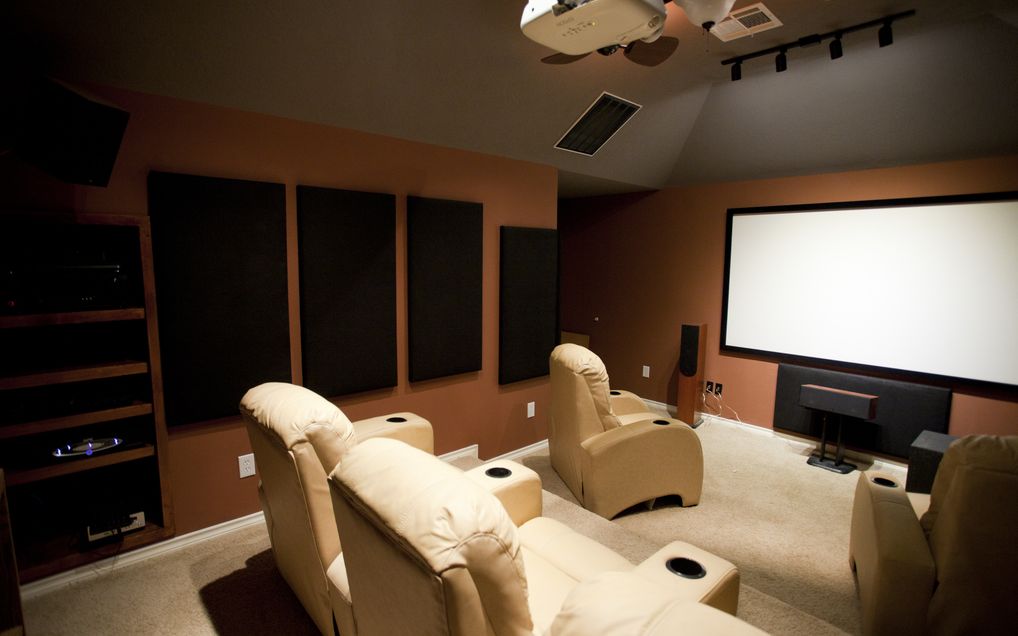
Few rooms suit the basement quite like a home theater. The space is already a little removed from the rest of the house, natural light is limited, and the concrete walls give you a quiet shell to build inside. With good planning, the corner where boxes used to gather can become the room everyone heads to on a cold Massachusetts Friday night.
Start with a dry, comfortable shell
Before any screen goes up, the basement itself has to be ready. We check for moisture along the foundation, seal cracks, and add a vapour-aware wall assembly with rigid foam against the concrete. A dehumidifier tied into the HVAC system keeps the air comfortable for fabric seating and electronics.
- Test for dampness on walls and slab before framing.
- Insulate rim joists, where much of the cold air sneaks in.
- Plan heating and fresh air so the room is not stuffy during long films.
Control sound in both directions
A great theater sounds full inside and stays quiet for the rest of the house. Resilient channels or sound clips on the ceiling, mineral wool between joists and a solid-core door make a remarkable difference. Inside the room, fabric-wrapped acoustic panels on the side walls tame echo so dialogue stays clear.
Think of the room as a box within a box: quiet outside, rich and clear inside.
Seating, sightlines and the screen
Measure the room before choosing a screen size, then place the main row so the image fills your view without turning your head. A low riser for the back row lifts those seats above the heads in front. Leave enough walking space behind the recliners so nobody trips in the dark.
Lighting that behaves like a cinema
Layered lighting is what makes the room feel special. We like a mix of soft step lights on the riser, warm wall sconces that wash the acoustic panels, and dimmable recessed lights for cleaning and setting up. Put everything on scenes so a tap of a button takes the room from bright to showtime.
- Warm colour temperatures keep the space cosy rather than clinical.
- Low-glare fixtures stop reflections on the screen.
- Step and aisle lights keep the room safe while the film is playing.
Wiring for today and tomorrow
Run conduit from the equipment location to the screen wall and the projector position while the walls are open. It costs little during the rebuild and makes future upgrades painless. A ventilated equipment closet keeps the room quiet and the hardware cool.
If your basement is waiting for its big moment, our team can walk through the space with you and sketch out what your own screening room could look like.